Sunday, October 9, 2011

Week 7: Clear on SaaS, DaaS

SaaS (Software as a Service) and DaaS (Data as a Service) are two categories of cloud computing. There is also IaaS (Infrastructure as a Service) and PaaS (Platform as a Service). Cloud computing is a style of computing where applications are made available through the internet and are accessible across many platforms. Cloud computing is then categorized into SaaS, DaaS, IaaS or PaaS depending on what service is used.

SaaS
Resources available as a software service are categorized into SaaS, where a single application is run through many clients. One of the many benefits to SaaS includes not having to maintain software requirements nor repeat installations. SaaS providers also take care of security and performances since the software application is run through a server, lowering costs for providers and often leaving customers free from licensing.

DaaS
DaaS provides a virtual desktop through the internet and allows its users to have control over data through data centers. The service provider is responsible for storage and backup. Data is provided "on demand", regardless of location.


Differences between SaaS and DaaS
SaaS only provides certain applications over the internet unlike DaaS, which provides desktop capabilities in a bundle of programs. SaaS users should typically backup their own data and provide their own storage since their servers are mostly responsible for security.

Graphic Source: Flickr user AJC1

Sunday, October 2, 2011

Week 6: Clear on Software Licensing

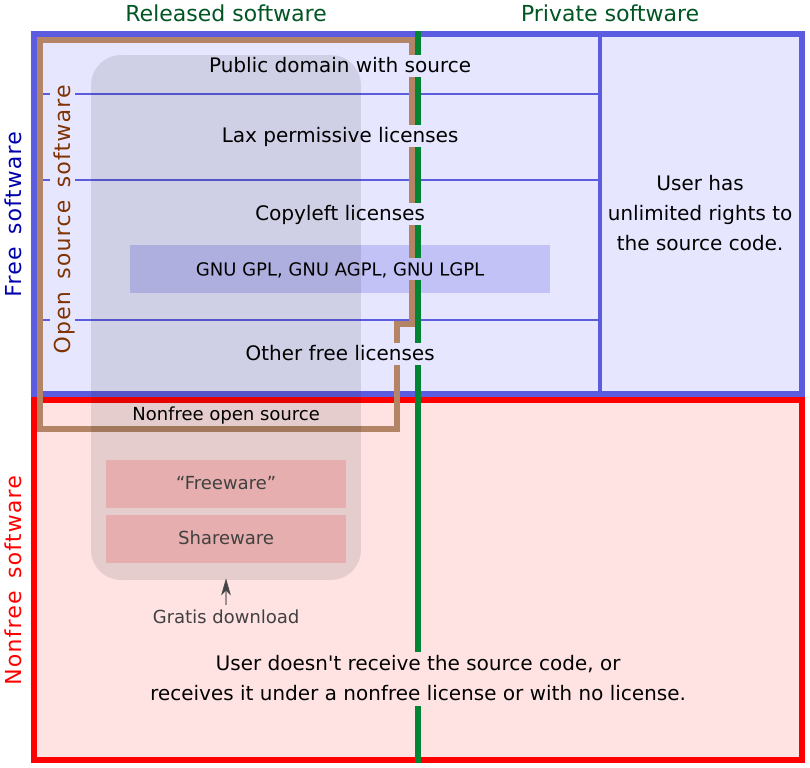
Although I was clear on the different types of software licensing agreements, I found the online article Making Sense of Software Licensing: The Stuff in Small Print Really Does Matter by author Chris Peters to be very helpful as far showing just how many types of agreements there are.


Directly quoted from the Peters article, the following definition of a software agreement couldn't be better:
"A software license is an agreement between you and the owner of a program which lets you perform certain activities which would otherwise constitute an infringement under copyright law."
EULA

We've all had to agree to EULA's, or end user license agreements, when downloading new programs onto our systems. These agreements explicitly state the terms in which the program is to be used. Without them, it would be impossible to use any program without infringing on copyright. Instead of looking at them as one more thing to click through during installations, realize that they are beneficial in making sure the licensor and licensee are both protected. 

Free vs. Proprietary

"Free" software refers to the rights you have when using the software--this type is usually redistributable and can be modified without paying a fee or obtaining any kind of permission. Proprietary licenses have fewer rights. Monetary price has no correlation; either type may be free or must be purchased. 

Public Domain and Copyleft

Copyleft is similar to free software in the sense of unrestricted rights, that is, all except for one. Any modifications must fall under the same terms as the original software, which prevents other developers from releasing their own versions under a proprietary license. When releasing any work into the public domain however, all rights are forfeited including ownership of the work, and it it free to use in any manner.


For a further analysis on licensing, the article can be found here.

Graphic Source: GNU Operating System: Categories of Free and Nonfree Software

Sunday, September 25, 2011

Week 5: Clear on Presentations


Graphic Sources:
Flickr user: copperfeesh
Public Domain images

Presentation © Sarah Reyes

Sunday, September 18, 2011

Week 4: Clear on Resource-Based View

In order for a company to retain a competitive advantage, its exploitable resources must have these four requirements:

Value
The company must devise a way to create value in their products or service, or else consumers will not make the purchase. This can be created by strategic marketing, such as establishing a strong brand image or even paying close attention to price--too low, and products are perceived as low value, too high and you could damage your sales. The right price constitutes the proper flow of customers, while maintaining value in the product or service.

Rarity
A resource must be rare, or else it will add no value to your company. Take for example a gallon of milk, which can be purchased at drugstores, small shops, and large retailers alike. The resource itself adds no competitive advantage, and therefore retailers must rely on pricing to get the product moving. There is no such thing as customer loyalty when your product does not have some level of rarity. 

Imperfectly Imitable 
Resources must be difficult to copy. Luxury items are a perfect example of this. The prestige of owning a certain car or brand creates a niche of consumers dedicated to that particular item. A Lamborghini cannot be replicated.

Non-Substitution
As discussed in the lecture, Miracle Whip is no substitute for Mayo. For those perhaps familiar with the hazelnut, chocolaty spread Nutella, you know there is no such thing as a substitute. Since customers cannot buy a similar product, there is no such thing as competition from a rival with the exact product.

Graphic Source: Flickr user c.a.muller

Sunday, September 11, 2011

Week 3: Clear on Network Topology

Local area networks (LANs) come in a variety of different shapes, each having their own unique advantages and disadvantages:

Bus Topology 
All nodes are connected to a single cable, or bus. This is an easy and inexpensive set up. However, if there is any type of connection issue, the entire network is down which also makes it difficult to pinpoint the source of the problem. 

Token Ring 
All nodes are connected as a giant ring which has no beginning or end. A token of code is then passed from neighbor to neighbor in an endless cycle, until it reaches the node it was intended for.


Star Topology 
All nodes are connected to a single, central point, which can be a hub, switch, or router. There are no disruptions to the network if one node shuts down or is added. If the central hub is disabled, however, the connected nodes are all off the network.


For more examples on network topology, visit http://fcit.usf.edu/network/chap5/chap5.htm

Graphics: © Sarah Reyes 2011

Sunday, September 4, 2011

Week 2: Clear on Binary

Binary code has always been a bundled mass of 0's and 1's, capable of making a cool wallpaper background or a texture layer on Photoshop. Today, i can tell you that 0 1 10 11 100 101 110 111 1000 1001 are numbers 0-9 in binary code, and they are far more significant than geekery eye candy.

Just as the number 1,234 has a 4 in the ones place (10^0), a 3 in the tens place (10^1), a 2 in the hundreds place (10^2), and a 1 in the thousands place (10^3), binary code also follows its own established powers place, using the power of 2 instead of 10. So the sequence becomes 2^0, 2^1, 2^2, 2^3 and so forth, resulting in the place values of 1, 2, 4, 8, equivalent to the familiar ones, tens, hundreds, thousands place values.


16s 8s 4s 2s 1s


0011 0 

The binary code above, for example, reads the number 6. This comes from the addition of the place values of 2 and 4 where the 1's have been placed.


Computers use the binary language for multiple applications, assigning numerical values to things such as pixel color, symbols, and storage capacity. For a complete look at the binary system, visit www.ludism.org/mentat/BinaryNumbersSystem

Graphic source: Flickr user LaMenta3; found here.

Week 1: Clear on Importance of Social Media

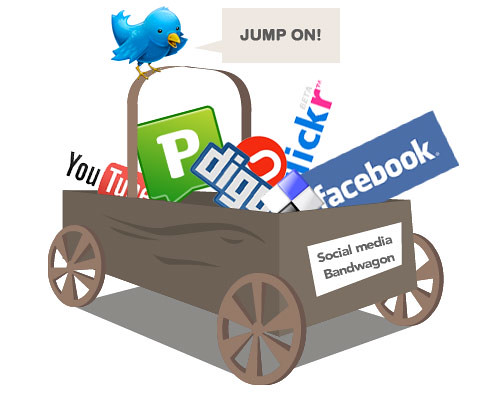
From the curious days of MySpace to the rise of the social media giant Facebook, its clear that the phenomenon of two-way online communication is here to stay.  Whereas MySpace began as a fun way to keep up with friends and listen to music for the teenage generation, social media has grown through sites like Facebook, Twitter and LinkedIn to a communication medium critical for growing businesses.

Customers now make or break a company through word-of-mouth online. If a product or service is well-received, positive word-of-mouth encourages friends and family to try it as well, and also improves the company's reputation. Likewise, a negative experience will be just as visible to countless others. But unlike traditional customer complaints, social media gives businesses the opportunity to publicly rectify the situation whether with an apology, clarification, or other means such as an offer to exchange or a discount. While no business goes without an unhappy customer or two, most consumers appreciate the action and often reassures them that they have a chance to voice their opinions to a company who is willing to listen. A business who interacts with their consumers online will reap the benefits of transparency, consumer insight, customer service, top-of-mind benefits, and free advertising.

Graphic Source: flickr user liako